Of Mice and Men
I'd Like to Apologize to Every Teacher I Ever HadOf Mice and Men is the first major literary work through which Tony Danza measures whether he can truly reach his tenth-grade English students. He chooses John Steinbeck’s short novel because its 112 pages look unintimidating, then discovers that its biblical prose, dense metaphors, and emotional complexity make it far more demanding than its size suggests. By framing the book as a story about friendship, building instruction around its characters and themes, and repeatedly asking students to connect its lessons to their own lives, Danza turns the novel into both a curriculum and a test of his emerging identity as a teacher.
Selection and Classroom Entry
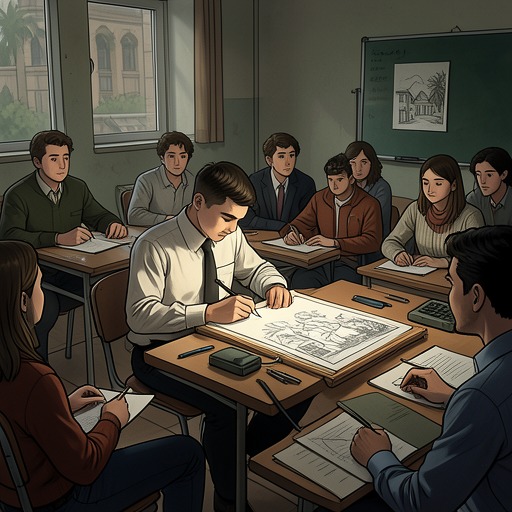
Danza initially treats the book’s thinness as an advantage. When students receive their copies, they immediately flip to the final page and celebrate that it has only 112 pages. The apparent ease is deceptive: Steinbeck’s language is difficult, its metaphors are heavy, and its biblical tone initially alienates the class. Danza finds an opening by emphasizing the relationship between George and Lennie, two friends whose attachment gives the students a human point of entry into a text they might otherwise dismiss.
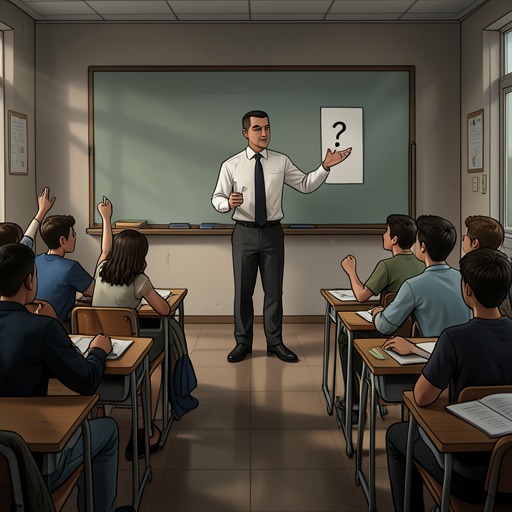
The class reads several chapters at a time and watches the classic 1939 film version, with Lon Chaney and Burgess Meredith. The film does not replace the novel; it gives the students another way to examine the same material. Danza guides discussion toward what may be wrong with Lennie, why George remains attached to him, and how Steinbeck constructs friendship, character, setting, and mood. The students gradually begin to engage with the book rather than merely endure it.
Gists, Quizzes, and Reading Practice
The novel becomes the basis for a recurring assessment method supplied by Lynn Dixon: the twenty-word “gist.” After each group of chapters, students must summarize what they have read in exactly twenty words. As the reading advances, each gist must contain more of the story while remaining within the same limit; the final gist must encompass the whole novel. Danza takes pleasure in watching students count the words on their fingers, but the exercise also gives him a practical way to distinguish genuine reading from bluffing.
The work exposes the unevenness of the class. Howard, the largest student and a member of the football, soccer, and baseball teams, comes to Danza after class and admits that the story does not stay with him no matter how hard he tries. Danza responds by demonstrating active reading: underlining important passages, writing notes in the margin, and rereading sections that do not make sense the first time. The novel therefore teaches Danza not only about Steinbeck but about the difference between being able to decode print and being able or willing to sustain attention to a book.
Examination and Literary Understanding
When the unit ends, Danza designs his first substantial exam by consulting sample tests, textbooks, and other English teachers. Their advice is that tenth graders should know the plot, characters, and vocabulary, but Danza wants the assessment to reach further. The completed test includes twenty questions on story points and background, vocabulary placed in sentences, passages requiring students to identify figurative language, and questions about the tone and mood of five passages, including the sensory words each passage uses.
The examination tests whether the class has understood the novel as a constructed work rather than simply remembered its events. Students must recognize irony, imagery, figurative language, tone, and mood, while also explaining how literature can illuminate their own experience. On test day, Danza patrols the classroom with the heightened vigilance required in a school where students carry phones and other devices capable of instant communication and data storage. The result confirms that the work has taken hold: almost everyone passes, including Howard, and students identify the irony of George killing his best friend, Lennie, as well as the significance of Steinbeck’s biblical tone. Al G’s score of ninety-one gives Danza an especially satisfying sign that a student who often appears disengaged has absorbed the material.
From Difficult Text to Reading Habit
Of Mice and Men also prompts Danza to confront a broader problem. Students who struggle with reading are not necessarily illiterate; they may be “aliterate,” capable of reading but unwilling to do so. He fears that students who do not read during summer vacation can lose as much as a grade level of reading ability, and he concludes that drills alone cannot solve the problem. The novel’s difficulty leads him toward a strategy of making reading attractive through subjects students already care about.
That strategy takes the form of a later unit on Twilight. Danza places short stories about sports and celebrities alongside the vampire romance, then uses the class’s interest in its film adaptation to introduce the 498-page book. Students read only three chapters a week, complete worksheets, and take Friday quizzes. The contrast with Of Mice and Men is revealing: the Steinbeck novel requires sustained instruction in how to read, while Twilight offers immediate narrative momentum. Yet Danza presents both books as evidence that books are stories rather than merely boring print, and he notices that Howard, who had complained about Steinbeck, begins handling the Twilight quizzes without difficulty. Eric Lopez’s open admission that he likes the vampire novel helps make the experiment socially acceptable to the boys as well as the girls.
Recurrence and Lasting Classroom Meaning
Months after the unit, the novel returns unexpectedly through a student’s personal story. On the first day back after spring vacation, Daniel reads an account of finding and rescuing a tiny kitten in his backyard. While describing the animal, he cups his large hands under his chin, imitates a meow, and calls the kitten Fluffy. Howard immediately compares Daniel with “that Lenny guy with the dead mouse from Of Mice and Men,” and the class joins the joke. The reference is comic, but its deeper effect is serious: students have retained a character and image from a book read months earlier, long after Danza feared the material would have disappeared from their minds.
Danza is moved by the memory. His own grin reflects the possibility that the teaching has worked, not because every student has become a literary specialist, but because the novel has entered the class’s shared language and can be used to interpret something happening in the room. The book’s themes also remain part of Danza’s stated educational purpose. He treats the English curriculum as a source of lessons about friendship, heroism, humane treatment, and walking in another person’s shoes before judging him. In that framework, Of Mice and Men is not an isolated assignment. It is a recurring reference point through which students practice empathy, recall, comparison, and self-recognition.
The novel’s influence is visible again in Danza’s large end-of-year scavenger hunt. One station requires a team to build a human pyramid whose levels correspond to the class system of Maycomb, Alabama, from To Kill a Mockingbird; another has students recite Rudyard Kipling’s “If”; and the relay costumes include Julius Caesar, Heck Tate, a pig from Animal Farm, and Lenny from Of Mice and Men. Lenny’s overalls make the novel physically present in a schoolwide game, transforming a difficult classroom text into a shared, embodied memory. Through these returns, the book becomes one of the clearest measures of Danza’s teaching year: it begins as a deceptively short assignment, becomes a challenge in literary instruction, helps reveal how students learn, and ends as part of the class’s durable imaginative culture.